


Thursday
Friday
GEI expands environmental planning practice
GEI expands environmental planning practice
Rancho Cordova, Calif. — GEI Consultants, Inc. expanded its Environmental Planning Practice with the addition of several key practice leaders and supporting staff, totaling more than 30 environmental practitioners, in the firm’s Sacramento office. This expansion of the Environmental Planning Practice allows GEI to integrate environmental design, permitting, and approvals into overall project planning and design, resulting in improved project design, more efficient approvals, and the ability to meet expedited project and construction schedules. With this expansion, the firm now offers clients and partners expanded California Environmental Quality Act (CEQA) and National Environmental Policy Act (NEPA) Compliance, Ecological Planning and Design, Archaeological Resources, Historical/Built Environment Resources, Land Use and Environmental Planning, Landscape Planning and Design, Water Quality Services, Regulatory Permitting, Biological Resources, and Conservation Planning.

“This expansion in our Environmental Planning capabilities allows GEI to provide our clients with full-service, turnkey environmental and engineering services that are fully integrated with GEI’s current planning and engineering practices,” says Bateni. “Our fully integrated team takes environmental documentation, permitting, and ecosystem restoration and mitigation into consideration during the engineering planning and design phases of the project to attain cost and schedule efficiency and effectiveness. Because of this, our clients can feel the peace of mind associated with having a key consulting partner that can successfully navigate them through the entire project development and implementation, saving them time, money, and transitional issues.”
The Environmental Practice Group has been greatly expanded, in both experience and depth, by adding several senior leaders in GEI’s Sacramento office, including: Francine Dunn, Vice President/Senior Environmental Project Manager, and California Environmental Practice leader; Cindy Davis, Senior Environmental Regulatory Specialist and Team Leader; Vance Howard, Senior Restoration Ecologist and Team Leader; Mark Bowen, Senior Architectural Historian and Team Leader; and Valerie Connor, Ph.D, Senior Scientist in Aquatic Biology and Water Quality.
Tuesday
FACTS ABOUT CONCRETE YOU MIGHT NOT KNOW
Concrete is one of the most popular and
strong construction material used these days by engineers and
professionals. However, did you know that this material was also used
back in the days by the Romans because of its immense durability and
strength? Here are a couple more interesting facts about concrete you
might want to know.
• Roman concrete was very different from today’s concrete. Back in the days, they used lime, volcanic ash from the Mount Vesuvius and water in order to create a sort of concrete which was used for construction purposes. Although it wasn’t extremely durable, it was still better than anything else.
• The Pantheon is built using Roman unreinforced concrete and its dome is the largest one in the world these days.
• A concrete mixture is usually composed from gravel and sand, water, cement and air. This type of construction material is very popular simply because most of these components are available in plenty of quantities everywhere.
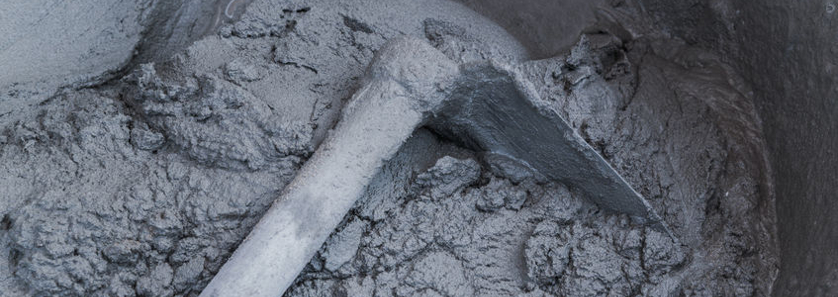
• Reinforced concrete is highly resistant to water and fire. That is why the professionals build a lot underwater structures using concrete only. Also, the legs of bridges are made from reinforced concrete too.
• Structures built from reinforced concrete are usually tougher and more resistant to wear and tear in comparison with structures which feature a stainless steel frame.
• Concrete is also very popular in construction because it can be shaped with little to no effort. In some cases, different items and objects are made entirely from concrete and they are used with decorative purposes by the professionals.
• Concrete is also used for constructing very tall buildings because this material cannot get damaged that easily and it is also easier and cheaper to maintain.
• Every year, companies are producing over 2 billion tons of concrete which is used for construction purposes in residential, commercial and industrial properties.
• Concrete usually features a rather simple and neutral appearance, but if you want to improve its design, you can use different types of coatings. Such coatings can make the concrete floors, for example, more resistant to wear and tear and they can also feature colors and different types of artworks too.
• Concrete slabs can be cut and drilled and sawed using diamonds. Basically, a diamond head is extremely durable and tough and it can easily cut through strong concrete slabs, so that the professionals can undertake maintenance and repairing projects afterwards.
• Concrete is the best material for building roads because it has a high compressive strength and it can be manipulated with little to no effort by the experts, in order to match the design, shape and size of various roads.
• Concrete is also used for building kitchen countertops too. These products are very durable, they add a modern and minimalistic look to the kitchen and they also increase home value as well.
Well, bet you didn’t know there are so many interesting facts about concrete! We love all things concrete, and if you have concrete slabs or concrete structures which feature cracks and splits, give us a call today and our specialists will offer you top quality concrete restoration services at very attractive prices!
• Roman concrete was very different from today’s concrete. Back in the days, they used lime, volcanic ash from the Mount Vesuvius and water in order to create a sort of concrete which was used for construction purposes. Although it wasn’t extremely durable, it was still better than anything else.
• The Pantheon is built using Roman unreinforced concrete and its dome is the largest one in the world these days.
• A concrete mixture is usually composed from gravel and sand, water, cement and air. This type of construction material is very popular simply because most of these components are available in plenty of quantities everywhere.
• Reinforced concrete is highly resistant to water and fire. That is why the professionals build a lot underwater structures using concrete only. Also, the legs of bridges are made from reinforced concrete too.
• Structures built from reinforced concrete are usually tougher and more resistant to wear and tear in comparison with structures which feature a stainless steel frame.
• Concrete is also very popular in construction because it can be shaped with little to no effort. In some cases, different items and objects are made entirely from concrete and they are used with decorative purposes by the professionals.
• Concrete is also used for constructing very tall buildings because this material cannot get damaged that easily and it is also easier and cheaper to maintain.
• Every year, companies are producing over 2 billion tons of concrete which is used for construction purposes in residential, commercial and industrial properties.
• Concrete usually features a rather simple and neutral appearance, but if you want to improve its design, you can use different types of coatings. Such coatings can make the concrete floors, for example, more resistant to wear and tear and they can also feature colors and different types of artworks too.
• Concrete slabs can be cut and drilled and sawed using diamonds. Basically, a diamond head is extremely durable and tough and it can easily cut through strong concrete slabs, so that the professionals can undertake maintenance and repairing projects afterwards.
• Concrete is the best material for building roads because it has a high compressive strength and it can be manipulated with little to no effort by the experts, in order to match the design, shape and size of various roads.
• Concrete is also used for building kitchen countertops too. These products are very durable, they add a modern and minimalistic look to the kitchen and they also increase home value as well.
Well, bet you didn’t know there are so many interesting facts about concrete! We love all things concrete, and if you have concrete slabs or concrete structures which feature cracks and splits, give us a call today and our specialists will offer you top quality concrete restoration services at very attractive prices!
Sunday
About civil engineering
About Civil Engineering
-
Civil engineers design, build, and maintain the foundation for our modern society – our roads and bridges, drinking water and energy systems, sea ports and airports, and the infrastructure for a cleaner environment, to name just a few.
Civil engineering touches us throughout our day. Think of a civil engineer when you:
- Turn on your tap to take a shower or drink clean water
- Flick on your lights and open your refrigerator
- Drive to work on roads and bridges through synchronized traffic lights
- Take mass transit or take a flight for a vacation
- Toss your empty coffee cup in the recycling bin

Spanning a Host of Specialties
Civil engineers often specialize in one of a number of technical areas. A few examples:- Transportation
- Coastal engineering
- Structural
- Environmental
- Geotechnical
- Construction
- Architectural
- Engineering mechanics
- And more
Time-Honored Civil Engineering Projects
The Golden Gate Bridge. The Eiffel Tower. The Hoover Dam. The creativity and innovative spirit of civil engineers is showcased in the projects they have created throughout the world. ASCE’s Historic Civil Engineering Landmarks program honors the best of those at least 50 years old.Civil Engineers Who Made Their Mark
Civil engineering achievement starts with people. Get to know the civil engineers who have left a legacy, and those who are just starting to build their own.Learning from Tragedy
Since the Johnstown Flood in 1889, ASCE has answered the call to study and learn from engineering failures due to natural disasters and man-made causes. These studies provide needed answers and new knowledge and become the basis for changes to building codes and engineering and construction practices to make the public safer.Encouraging Youth Interest
Civil engineers volunteer their time to raise the public’s understanding of how their profession changes the world and boosts our quality of life. Check out ASCE's resources for reaching students on the appeal of a civil engineering career.Promoting Diversity and Inclusion
The future strength of the civil engineering profession will come from an engineering workforce that mirrors the population it serves.A Vision for the Profession
An ASCE summit took the lead in exploring the future and defining the civil engineer’s role in that new world. Explore what civil engineers aspire to in The Vision for Civil Engineering in 2025.Hear from Leaders in the Profession
ASCE lets you relax and listen to the views and stories of prominent civil engineers through the Insights podcast interview series.You can also view compact discussions of the top civil engineering issues of the day in the ASCE Interchange video series.
Thursday
Civil engineering
Civil engineering
In modern usage, civil engineering is a
broad field of engineering that deals with the planning, construction,
and maintenance of fixed structures, or public works, as they are
related to earth, water, or civilization and their processes.
Most civil engineering today deals with power
plants, bridges, roads, railways, structures, water supply, irrigation,
environmental, sewer, flood control, transportation, telecommunications
and traffic.
In essence, civil engineering may be regarded as the profession that makes the world a more agreeable place in which to live.
Engineering has developed from observations of the ways natural and constructed systems react and from the development of empirical equations that provide bases for design.
Civil engineering is the broadest of the engineering fields, partly because it is the oldest of all engineering fields.
In fact, engineering was once divided into only two fields, military and civil.
Civil engineering is still an umbrella term, comprised of many related specialities.
In essence, civil engineering may be regarded as the profession that makes the world a more agreeable place in which to live.
Engineering has developed from observations of the ways natural and constructed systems react and from the development of empirical equations that provide bases for design.
Civil engineering is the broadest of the engineering fields, partly because it is the oldest of all engineering fields.
In fact, engineering was once divided into only two fields, military and civil.
Civil engineering is still an umbrella term, comprised of many related specialities.
Note: The above text is excerpted from the Wikipedia article "Civil engineering", which has been released under the GNU Free Documentation License.
Wednesday
smallest lattice structure worldwide

The smallest lattice in the world
is visible under the microscope only. Struts and braces are 0.2 µm in
diameter. Total size of the lattice is about 10 µm.
Credit: J. Bauer / KIT
3-D lattice with glassy carbon struts and braces of less than 200 nm in diameter has higher specific strength than most solids
- Date:
- April 21, 2016
- Source:
- Karlsruher Institut für Technologie (KIT)
- Summary:
- Scientists have now presented the smallest human-made lattice structure. Its struts and braces are made of glassy carbon. They are smaller than comparable metamaterials by a factor of five. The small dimension results in so far unreached ratios of strength to density. Applications as electrodes, filters or optical components might be possible.
KIT scientists now present the smallest lattice structure made by man in the Nature Materials
journal. Its struts and braces are made of glassy carbon and are less
than 1 µm long and 200 nm in diameter. They are smaller than comparable
metamaterials by a factor of 5. The small dimension results in so far
unreached ratios of strength to density. Applications as electrodes,
filters or optical components might be possible.
"Lightweight construction materials, such as bones and wood, are
found everywhere in nature," Dr.-Ing. Jens Bauer of Karlsruhe Institute
of Technology (KIT), the first author of the study, explains. "They have
a high load-bearing capacity and small weight and, hence, serve as
models for mechanical metamaterials for technical applications."
Metamaterials are materials, whose structures of some micrometers (millionths of a meter) in dimension are planned and manufactured specifically for them to possess mechanical or optical properties that cannot be reached by unstructured solids. Examples are invisibility cloaks that guide light, sound or heat around objects, materials that counterintuitively react to pressure and shear (auxetic materials) or lightweight nanomaterials of high specific stability (force per unit area and density).
The smallest stable lattice structure worldwide presented now was produced by the established 3D laser lithography process at first. The desired structure of micrometer size is hardened in a photoresist by laser beams in a computer-controlled manner. However, resolution of this process is limited, such that struts of about 5 -- 10 µm length and 1 µm in diameter can be produced only. In a subsequent step, the structure was therefore shrunk and vitrified by pyrolysis. For the first time, pyrolysis was used for manufacturing microstructured lattices. The object is exposed to temperatures of around 900°C in a vacuum furnace. As a result, chemical bonds reorient themselves. Except for carbon, all elements escape from the resist. The unordered carbon remains in the shrunk lattice structure in the form of glassy carbon. The resulting structures were tested for stability under pressure by the researchers.
"According to the results, load-bearing capacity of the lattice is very close to the theoretical limit and far above that of unstructured glassy carbon," Prof. Oliver Kraft, co-author of the study, reports. Until the end of last year, Kraft headed the Institute for Applied Materials of KIT. This year, he took over office as KIT Vice President for Research. "Diamond is the only solid having a higher specific stability."
Microstructured materials are often used for insulation or shock absorption. Open-pored materials may be used as filters in chemical industry. Metamaterials also have extraordinary optical properties that are applied in telecommunications. Glassy carbon is a high-technology material made of pure carbon. It combines glassy, ceramic properties with graphite properties and is of interest for use in electrodes of batteries or electrolysis systems.
Metamaterials are materials, whose structures of some micrometers (millionths of a meter) in dimension are planned and manufactured specifically for them to possess mechanical or optical properties that cannot be reached by unstructured solids. Examples are invisibility cloaks that guide light, sound or heat around objects, materials that counterintuitively react to pressure and shear (auxetic materials) or lightweight nanomaterials of high specific stability (force per unit area and density).
The smallest stable lattice structure worldwide presented now was produced by the established 3D laser lithography process at first. The desired structure of micrometer size is hardened in a photoresist by laser beams in a computer-controlled manner. However, resolution of this process is limited, such that struts of about 5 -- 10 µm length and 1 µm in diameter can be produced only. In a subsequent step, the structure was therefore shrunk and vitrified by pyrolysis. For the first time, pyrolysis was used for manufacturing microstructured lattices. The object is exposed to temperatures of around 900°C in a vacuum furnace. As a result, chemical bonds reorient themselves. Except for carbon, all elements escape from the resist. The unordered carbon remains in the shrunk lattice structure in the form of glassy carbon. The resulting structures were tested for stability under pressure by the researchers.
"According to the results, load-bearing capacity of the lattice is very close to the theoretical limit and far above that of unstructured glassy carbon," Prof. Oliver Kraft, co-author of the study, reports. Until the end of last year, Kraft headed the Institute for Applied Materials of KIT. This year, he took over office as KIT Vice President for Research. "Diamond is the only solid having a higher specific stability."
Microstructured materials are often used for insulation or shock absorption. Open-pored materials may be used as filters in chemical industry. Metamaterials also have extraordinary optical properties that are applied in telecommunications. Glassy carbon is a high-technology material made of pure carbon. It combines glassy, ceramic properties with graphite properties and is of interest for use in electrodes of batteries or electrolysis systems.
Story Source:
The above post is reprinted from materials provided by Karlsruher Institut für Technologie (KIT). Note: Materials may be edited for content and length.
The above post is reprinted from materials provided by Karlsruher Institut für Technologie (KIT). Note: Materials may be edited for content and length.
Journal Reference:
- J. Bauer, A. Schroer, R. Schwaiger, O. Kraft. Approaching theoretical strength in glassy carbon nanolattices. Nature Materials, 2016; DOI: 10.1038/nmat4561
Top 10 interview Questions for civil engineering students
1.What are the steps involved in the concreting process, explain?
The major steps involved in the process of concreting are as follows:1. Batching
2. Mixing
3. Transporting and placing of concrete
4. Compacting.
> Batching: The process of measurement of the different materials for the making of concrete is known as batching. batching is usually done in two ways: volume batching and weight batching. In case of volume batching the measurement is done in the form of volume whereas in the case of weight batching it is done by the weight.
> Mixing: In order to create good concrete the mixing of the materials should be first done in dry condition and after it wet condition. The two general methods of mixing are: hand mixing and machine mixing.
> Transportation and placing of concrete: Once the concrete mixture is created it must be transported to its final location. The concrete is placed on form works and should always be dropped on its final location as closely as possible.
> Compaction of concrete: When concrete is placed it can have air bubbles entrapped in it which can lead to the reduction of the strength by 30%. In order to reduce the air bubbles the process of compaction is performed. Compaction is generally performed in two ways: by hand or by the use of vibrators.

2. Describe briefly the various methods of concrete curing.
Curing is the process of maintaining the moisture and temperature conditions for freshly deployed concrete. This is done for small duration of time to allow the hardening of concrete. The methods that are involved in saving the shrinkage of the concrete includes:(a) Spraying of water: on walls, and columns can be cured by sprinkling water.
(b) Wet covering of surface: can be cured by using the surface with wet gunny bags or straw
(c) Ponding: the horizontal surfaces including the slab and floors can be cured by stagnating the water.
(d) Steam curing: of pre-fabricated concrete units steam can be cured by passing it over the units that are under closed chambers. It allows faster curing process and results in faster recovery.
(e) Application of curing compounds: compounds having calcium chloride can be applied on curing surface. This keeps the surface wet for a very long time.
3. What do you understand by “preset” during the installation process of bridge bearings?
During the installation of bridge bearings the size of the upper plates is reduced to save the material costs. This process is known as preset. Generally the upper bearing plate comprises of the following components:> Length of bearing
> 2 x irreversible movement.
> 2 x reversible movement.
The bearing initially is placed right in the middle point of the upper bearing plate. No directional effects of irreversible movement is considered. But since the irreversible movement usually takes place in one direction only the displaced direction is placed away from the midpoint. In such cases the length of the upper plate is equal to the length of the length of the bearing + irreversible movement + 2 x reversible movement.
4. Why are steel plates inserted inside bearings in elastomeric bearings?
In order to make a elastomeric bearing act/ function as a soft spring it should be made to allow it to bulge laterally and also the stiffness compression can be increased by simply increasing the limiting amount of the lateral bulging. In many cases in order to increase the compression stiffness of the bearing the usage of metal plates is made. Once steel plates are included in the bearings the freedom of the bulge is restricted dramatically, also the deflection of the bearing is reduced as compared to a bearing without the presence of steel plates. The tensile stresses of the bearings are induced into the steel plates. But the presence of the metal plates does not affect the shear stiffness of the bearings.5. What reinforcements are used in the process of prestressing?
The major types of reinforcements used in prestressing are:> Spalling Reinforcement: The spalling stresses leads to stress behind the loaded area of the anchor blocks. This results in the breaking off of the surface concrete. The most likely causes of such types of stresses are Poisson`s effects strain interoperability or by the stress trajectory shapes.
> Equilibrium reinforcements: This type of reinforcements are required where several anchorages exist where the prestressing loads are applied in a sequential manner.
> Bursting Reinforcements: These kinds of stresses occur in cases where the stress trajectories are concave towards the line of action of load. In order to reduce such stresses reinforcements in the form of bursting is required.
6. In the design of bridge arguments what considerations should be made to select the orientation of the wing walls?
Some of the most common arrangements of wing walls in cases of bridge arguments are as follows:> Wing walls parallel to abutments: This method is considered to take least amount of time to build and is simple as well. But on the downside this method is not the most economical. The advantage of this type of design being that they cause the least amount of disturbance to the slope embankment.
> Wing walls at an angle to abutments: This design method is considered to be the most economical in terms of material cost.
> Wing walls perpendicular to abutments: The characteristic of this design is it provides an alignment continuous with the bridge decks lending a support to the parapets.
7. In case if concrete box girder bridges how is the number of cells determined?
When the depth of a box girder bridge exceed 1/6th or 1/5th of the bridge width then the design recommended is that of a single cell box girder bridge. But in case the depth of the bridge is lower than 1/6th of the bridge width then a twin-cell or in some cases multiple cell is the preferred choice. One should also note that even in the cases of wider bridges where there depths are comparatively low the number of cells should be minimized. This is so as there is noticeably not much improvement in the transverse load distribution when the number of cells of the box girder is higher than three or more.8. Under what circumstances should pot bearings be used instead of elastomeric bearings?
Pot bearings are preferred over elastomeric bearings in situations where there are chances of high vertical loads in combinations of very large angle of rotations. Elastomeric bearings always require a large bearing surface so that a compression is maintained between the contact surfaces in between the piers and the bearings. This is not possible to maintained in high load and rotation environment. Also the usage of elastomeric bearings leads to the uneven distribution of stress on the piers. This results in some highly induced stresses to be targeted at the piers henceforth damaging them. Due to the above reasons pot bearings are preferred over elastomeric bearings in such cases.
9. Why should pumping be not used in case of concreting works?
During the pumping operation the pump exerted pressure must overcome any friction between the pumping pipes and the concrete, also the weight of the concrete and the pressure head when the concrete is placed above the pumps. Since only water is pump able, all the pressure generated is by the water that is present in the concrete. The major problem due to pumping are segregation effects and bleeding. In order to rectify and reduce these effects, generally the proportion of the cement is increased in order to increase the cohesion , which leads to the reduction of segregation and bleeding. Also if a proper selection of the aggregate grading can vastly improve the concrete pump ability.10. Why should curing not be done by ponding and polythene sheets?
The primary purpose of curing is to reduce the heat loss of concrete that is freshly placed to the atmosphere and in order to reduce the temperature gradient across the cross-section of the concrete. Ponding is not preferred for curing as this method of thermal curing is greatly affected by cold winds. In addition to that in ponding large amounts of water is used and has to be disposed off from the construction sites. Polythene sheets are used on the basis that it creates an airtight environment around the concrete surface henceforth reducing the chances of evaporation over fresh concrete surfaces. But the usage of polythene can be a drawback as it can be easily blown away by winds and also the water lost by self-desiccation cannot be replenished.Top 15 civil engineering interview question
1. What are the different type of slump test indications?
Slump tests are performed to empirically measure the workability of fresh concrete. It is used to measure the consistency of the concrete. In general there are three different types of slumps that occur in slump tests. They are as follows:> True Slump
> Shear Slump
> Collapse Slump
True Slump: This type of slump is characterized by the general drop of the concrete mass evenly without visible signs of deterioration or disintegration.
Shear Slump: It indicates that the concrete mix is deficient in cohesion. This type of slump leads to segregation and bleeding. Henceforth in the long run effecting the durability of the concrete.
Collapse Slump: This type of slump is indicates that the mix of concrete is simply too wet. The mix is considered to be harsh and lean.
2. Why is propping required for long structures once the formwork is removed?
Once the process of concreting is performed the striking of the formworks should be done as soon as possible as delay in this process can lead to the discoloration of the concrete structures. In case of long structures particularly long span structures once the structures have attained enough strength to support themselves it is essential to provide them with propping as creep deflection can take place which can greatly reduce the integrity of the structure. Due to the above mentioned reasons propping should be done after the removal of formwork. Also the props should not be made to stand long as it can lead to overstress for the structures.
3. Explain the mechanism of cavitations in pipes and drains?
The formation of air bubbles in a fluid due to low pressure conditions lower than the saturation pressure is known as cavitations. This is considered to be a high potential damage condition where the strength and durability of the pipes can be greatly reduced. Cavitation works on the principle of Bernoulli's Equation. When fluids are at high velocities the pressure head of fluids reduce accordingly. But since the fluid pressure is lower than the saturation pressure the dissolved gases get released from the flowing fluid. These air bubbles suddenly collapse on entering a region of high pressure. This leads to the damage of the pipelines as a high level of dynamic pressure is created.4. For what purpose bedding is used under storm water drains, explain?
Beddings are primarily made up of granular or concrete materials. They are primarily used for the following purposes:> They are used to provide a more uniform support for the under pipes so that the bending moment longitudinally can be reduced greatly.
> In order to enable the pipes to get more load-supporting strength.
> They are also used to act as a platform to achieve a more correct alignment and level pre and post construction.
> In case of pipes which contain spigot and socket joints, it enables pipes to get supported along pipe lengths in place of sockets. Otherwise it can lead to uneven stress being induced on the pipes eventually damaging it.
5. Why are pull-out tests performed for soil nails?
Pull out tests are performed for primarily the following reasons:> In order to detect and the verification of the bond strength among the soil and the grout adopted during the design of soil nails. This is considered to be as the primary objective of performing pull out tests for soil nails.
> For the detection of any slippage or occurrence of creeps.
> To detect the elastic and deformations (plastic) of any of the test nails employed. Observations are made during the loading and unloading cycles of the soil nails repetitively.
> To achieve the perfect balance the test nails should always be loaded so that the ultimate soil/grout mixture with an upper limit of 80%.
6. Describe briefly the advantages and disadvantages of using plastic and timber fenders?
The advantages and disadvantages of using plastic fenders are as follows:Plastic fenders are low in strength with a relatively high resistance to abrasion. Plastic fenders are resistant to chemical and biological attacks. Plastic fenders have moderate energy absorption capacity. The berthing reactions are also comparatively moderate and depends on the point of contact. Also since they are made from recycled material they are environmental friendly.
The advantages and disadvantages of using timber fenders are:
timber fenders are low in strength and are very susceptible to marine borer attacks and rotting. The energy absorption capacity is very low. Also generally the contact pressure between the vessels and the fender are high.
7. Explain why concrete barriers have curved surface profiles?
The concrete safety fencings are made to contain vehicles in their carriageway being travelled so as to reduce the chances of rebounding into the roads leading to more hazards. In the case of normal fencings upon vehicle crashes the fencings give away so as to absorb as much energy as possible henceforth reducing the impact on the vehicles. But in the case of concrete barriers their purpose is not to absorb energy of vehicles crashing into the barrier but to retain them. They have a curved design so as to allow the vehicles that hit them to slightly go up on the barrier but not overturn. They also prevent the vehicle from again getting back on the road by rebounds. This helps in vastly reducing the chances of other vehicle hazards.8. Why is the use of granular sub-base in concrete carriageways not preferred, explain?
Some of the reasons why granular sub-base is not preferred in concrete carriageways:> Sub bases are permeable and hence water can seep through them easily. The soil particles get pumped out through the joints on the application of traffic loads. This results in the creation of voids underneath the pavement structure. This leads to the weakening of the concrete surface and it can crack easily upon intense traffic loads.
> Instead if lean concrete is used for carriageways it greatly increases the strength of the roads and the load carrying capacity of the roads is increased.
> Sub-bases implementation requires a lot of workmanship which can lead to an un-uniform distribution of the sub-base. This can lead to the cracking of the carriageway when there is severe traffic loading.
9. Why are separation membranes used between concrete pavement slab and sub-base?
The purpose of separation membrane between the concrete pavement slab and the sub-base are as follows:> The separation membrane reduces the frictional forces between the concrete slabs and the sub-base. The membrane aids the movement of the concrete slab in reference to the sub-base when changes in the level of the moisture and temperature occurs.
> It aids in the segregation of sub-base materials from freshly placed concrete.
> The separation membrane also helps in the reduction of cement and water loss in the form of immature concrete. Immature concrete greatly affects the strength of the concrete. It also affects the durability of it.
A good example of a separation membranes is polythene sheeting which is commonly used.
10. In the roof of a pumping station explain briefly the components of a waterproofing system.
The components of a typical waterproofing system on the roof of a pumping station are as follows:> Right above the structural finish level of the roof ( concrete ) a uniform thickness screed is applied so as to facilitate the application of the waterproofing membrane. The surface provide for the membrane should always possess good cohesion properties and must be thin so as to prevent any un-uniformity. This thin layer also acts as a layer of thermal insulation.
> Right above this layer the waterproofing membrane is deployed to secure the water tightness of the roof.
> In order to enhance the thermal insulation of the roof an insulation board is sometime placed right above the waterproof membrane. The insulation board helps in the maintenance of a stable temperature in both weathers.

11. During reclamation how can the occurrence of mud waves can be rectified?
There are several solution to the rectification of the problem of mud waves:> Complete removal of all the disturbed mud: This method can be considered to be one of the fastest methods. As soon as the disturbed mud is removed some filling material is used to replace the disturbed mud. But economically this method can be expensive as compared to others.
> Accelerated consolidation of disturbed mud: In this method surcharging loads are placed on top of the mud waves. Along with this band drains are installed to accelerate the consolidation process. This method is quite slow compared to the other methods.
> Partial removal of the disturbed mud: This method is the hybrid of the above two methods where the top layer is removed whereas the lower level is treated with the surcharging process.
12. In reclamation works what are the importance of geotextiles and sand?
The primary purposes of geotextiles and sand in reclamation works are as follows:> Geotextiles: They are used to separate the marine mud from the reclamation fill. Also geotextiles are used as reinforcements in reclamation processes to increase its stability. It is still debated as to whether the usage of geotextiles is better or are the old processes followed are better as the performance has not been comparable to the conventional methods.
> Sand: In reclamation process sand is used to spread the load of any future public dumps placed on top of it. Sand also acts as a drainage for the excess pore water pressure of band drain installations.
13. In block work seawalls what is the purpose of slip joints?
Joints which are formed from the cope level to the toe level of seawalls through a complete vertical plane are known as slip joints. Such joints are designed so as to handle the differential settlements between the seawalls adjacent panels. In the slip joints the aggregates inside the half-rounds channels enables some vertical movements. These vertical movements are induced by differential settlements. This enables in the interlocking of the adjacent panels of the seawalls to link the panels in one unit against the earth pressure ( lateral ) which is exerted on the seawalls.14. For a washout valve why are two gate valves required in normal practice?
The washout valves are primarily used for normal maintenance works such as that of water main. This can be like to allow water to flow out during the cleaning of the water main. The junctions at which a pipe branches out to a washout point usually a gate valve is installed so that the two pipelines are separated. The gate valve installed above usually remains open during normal operation. Another gate valve is installed further downstream and this remains closed during normal operation of the washout valve. In case this valve is not installed then the pipe section of the branched out pipe would remain dry during normal operation and high chances of damage and leakage can take place. When the downstream valve is installed the branched out water main contains water under normal operation. With two gate valves installed a leakage can be detected immediately.15. What are the different approaches in designing the floors of the service reservoirs?
In general there are two main approaches of designing the reservoir floors to prevent leakage of water due to seasonal and shrinkage movements:> In this approach the movement joints of the reservoir floor panels are such that the free expansion and contraction of the panels takes place. Every panel is isolated from the other panels and two panels have a sliding layer between them to help in sliding.
> The second method does not provide any room for free movement. With seasonal and shrinkage movements, some cracks are designed to voluntarily occur on the floors of the service reservoirs. These tiny cracks are spread throughout the floor and are simply too minute to cause any leakage or corrosion of the floors. But the difference also in this method is that the amount of reinforcement used is much more than the first approach.
Top 5 civil engineering interview questions
1. In the design of bridge arguments what considerations should be made to select the orientation of the wing walls?
Some of the most common arrangements of wing walls in cases of bridge arguments
are as follows:
> Wing walls parallel to abutments: This method is considered to take least amount of time to build and is simple as well. But on the downside this method is not the most economical. The advantage of this type of design being that they cause the least amount of disturbance to the slope embankment.
> Wing walls at an angle to abutments: This design method is considered to be the most economical in terms of material cost.
> Wing walls perpendicular to abutments: The characteristic of this design is it provides an alignment continuous with the bridge decks lending a support to the parapets.
> Wing walls parallel to abutments: This method is considered to take least amount of time to build and is simple as well. But on the downside this method is not the most economical. The advantage of this type of design being that they cause the least amount of disturbance to the slope embankment.
> Wing walls at an angle to abutments: This design method is considered to be the most economical in terms of material cost.
> Wing walls perpendicular to abutments: The characteristic of this design is it provides an alignment continuous with the bridge decks lending a support to the parapets.
2. In case if concrete box girder bridges how is the number of cells determined?
When the depth of a box girder bridge exceed 1/6th or 1/5th of the bridge width
then the design recommended is that of a single cell box girder bridge. But in
case the depth of the bridge is lower than 1/6th of the bridge width then a
twin-cell or in some cases multiple cell is the preferred choice. One should
also note that even in the cases of wider bridges where there depths are
comparatively low the number of cells should be minimized. This is so as there
is noticeably not much improvement in the transverse load distribution when the
number of cells of the box girder is higher than three or more.
3. Under what circumstances should pot bearings be used instead of elastomeric bearings?
Pot bearings are preferred over elastomeric bearings in situations where there
are chances of high vertical loads in combinations of very large angle of
rotations. Elastomeric bearings always require a large bearing surface so that
a compression is maintained between the contact surfaces in between the piers
and the bearings. This is not possible to maintained in high load and rotation
environment. Also the usage of elastomeric bearings leads to the uneven
distribution of stress on the piers. This results in some highly induced
stresses to be targeted at the piers henceforth damaging them. Due to the above
reasons pot bearings are preferred over elastomeric bearings in such cases.

4.Why should pumping be not used in case of concreting works?
During the pumping operation the pump exerted pressure must overcome any
friction between the pumping pipes and the concrete, also the weight of the
concrete and the pressure head when the concrete is placed above the pumps.
Since only water is pump able, all the pressure generated is by the water that
is present in the concrete. The major problem due to pumping are segregation
effects and bleeding. In order to rectify and reduce these effects, generally
the proportion of the cement is increased in order to increase the cohesion ,
which leads to the reduction of segregation and bleeding. Also if a proper
selection of the aggregate grading can vastly improve the concrete pump
ability.
5. Why should curing not be done by ponding and polythene sheets?
The primary purpose of curing is to reduce the heat loss of concrete that is
freshly placed to the atmosphere and in order to reduce the temperature
gradient across the cross-section of the concrete. Ponding is not preferred for
curing as this method of thermal curing is greatly affected by cold winds. In
addition to that in ponding large amounts of water is used and has to be
disposed off from the construction sites. Polythene sheets are used on the
basis that it creates an airtight environment around the concrete surface
henceforth reducing the chances of evaporation over fresh concrete surfaces.
But the usage of polythene can be a drawback as it can be easily blown away by
winds and also the water lost by self-desiccation cannot be replenished.
The 50 civil engineering interview questions
1. How can you distinguish between sorption, absorption and adsorption?
2. What is modular elasticity?
3. Discuss some applications of modular elasticity.
4. What is difference between engineering stress and true stress?
5. What are some structures that are subjected to fatigue?
6. What is the tensile strength of wood?
7. Explain soil analysis?
8. What is soil enforcement?
9. How can you achieve soil enforcement?
10. What is a bearing capacity of soil?

11. Why does the pressure increase under soil?
12. How to increase a bearing capacity of soil?
13. What you understand by building codes?
14. Explain moment of inertia and its importance.
15. Which is the best book for building construction?
16. How do we determine the specific gravity of a cement?
17. What are the causes of building collapse?
18. Explain the latest method to detect a crack in a building?
19. How do we test on design and style in a software?
20. Explain different types of RCC pipes.
21. Explain the design for RCC multi-storied building?
22. What are the benefits of RCC pipes over steel designed pipes?
23. Elaborate advantages & disadvantages of using crusher dust instead of
sand in RCC work.
24. How can you produce desired alloys and discuss their applications in daily
life.
25. Can inverted beams used in pipes during construction? If yes, explain how
it can be implemented?
26. What is rigging?
27. What are the techniques to measure road difference?
28. Explain major differences between routing maintenance and major
maintenance.
29. What you understand by Richter scale?
30. How do we calculate the power of centrifugal pump?
31. What is a tensile strength? What is the tensile strength of wood?
32. Difference between pre-tensioning and post-tensioning.
33. Explain the difference between shear and tensile strength.
34. Why the statue of liberty is made of Copper?
35. What is the difference between TOR steel and TMT steel?
36. Which code is used for TOR & TMT steel bar?
37. Explain major difference between auto level and dumpy level?
38. What is the L/D ratio of cantilever beam?
39. What is the ratio of steel and concrete to use in slabs , beams, columns ?
40. What is pre-stressed concrete?
41. What are the ingredients of pre-stressed concrete?
42. What do you mean by honeycomb in concrete?
43. Why is concrete cube test carried out?
44. How do you calculate the power of centrifugal pump?
45. What is aggregate?
46. What is absolute pressure? How absolute pressure is calculated?
47. What is the absolute pressure scale?
48. What is gravity flow?
49. What is a projection line?
50. What is horizon or horizontal mining?
construction
They are not machines that could excite an onlooker; technology wise they have come a long way – BY JAYASHREE MENDES
Last month, the National Highways Authority of India (NHAI) awarded
roads and highways projects amounting to Rs 34,800 crore totalling
2,819km for the year FY16. Yes, we heard the huge sigh of relief that
went out from road equipment makers who have been struggling for some
time hoping for a revival in road projects thus starting the chain of
business once again. The emerging demand for equipment means that motor
grader manufacturers will have to better position themselves to meet
requirements through existing and newer planned solutions offerings that
will deliver higher equipment uptime for faster surface preparation and
finally quality finished roads. Coupled with this, they will also need
to further strengthen their efforts on requisite product support.
Considering the lull in the market that has been around for some time, most manufacturers have had time to look at design
and come up with new ones that are more attractive and ergonomic. Sanjay Saxena, BU head and VP, heavy equipment division, Sany India, says, “We have relooked at the design. Today, our load sensitive hydraulic working system helps distribute hydraulic flow at different working mechanisms according to actual needs, respond rapidly and control precisely, resulting in excellent levelling quality. It automatically regulates the flow volume of the system according to external load, saving engine power and lowering fuel cost. The intelligent fan cooling system monitors the system’s temperature real time; the hydraulic motor controls the rotating speed of the fan steplessly, resulting in low power consumption and low noise, while slewing bearing operation device features high precision, long maintenance periods, low failure rate, and low maintenance cost.”
A new entrant in the motor graders market, Schwing Stetter has designed and created GR150 with an engine that is BS III certified and has dual stage fuel filtering technology. The closed turn circle assembly with hardened slewing gear not only protects it from the dusty environment but makes it maintenance free. VG Sakthikumar, MD, Schwing Stetter Sales and Services, and chairman of Mechanisation Committee, Builders Association of India, says, “Being an ARAI certified product, the GR150, a 150hp motor grader, can be used in applications such as road building, cutting a ditch, earth moving or fine grading. Our components are sourced from renowned manufacturers, which ensure its reliability and performance while being low on maintenance. Talking about the ergonomics, GR150 has a hydraulically operated engine hood in the rear, making it very easy to carry out engine maintenance. Also, all the maintenance controls are at the ground level, so that they can be accessed easily.”
Considering the lull in the market that has been around for some time, most manufacturers have had time to look at design
and come up with new ones that are more attractive and ergonomic. Sanjay Saxena, BU head and VP, heavy equipment division, Sany India, says, “We have relooked at the design. Today, our load sensitive hydraulic working system helps distribute hydraulic flow at different working mechanisms according to actual needs, respond rapidly and control precisely, resulting in excellent levelling quality. It automatically regulates the flow volume of the system according to external load, saving engine power and lowering fuel cost. The intelligent fan cooling system monitors the system’s temperature real time; the hydraulic motor controls the rotating speed of the fan steplessly, resulting in low power consumption and low noise, while slewing bearing operation device features high precision, long maintenance periods, low failure rate, and low maintenance cost.”
A new entrant in the motor graders market, Schwing Stetter has designed and created GR150 with an engine that is BS III certified and has dual stage fuel filtering technology. The closed turn circle assembly with hardened slewing gear not only protects it from the dusty environment but makes it maintenance free. VG Sakthikumar, MD, Schwing Stetter Sales and Services, and chairman of Mechanisation Committee, Builders Association of India, says, “Being an ARAI certified product, the GR150, a 150hp motor grader, can be used in applications such as road building, cutting a ditch, earth moving or fine grading. Our components are sourced from renowned manufacturers, which ensure its reliability and performance while being low on maintenance. Talking about the ergonomics, GR150 has a hydraulically operated engine hood in the rear, making it very easy to carry out engine maintenance. Also, all the maintenance controls are at the ground level, so that they can be accessed easily.”

The stress on higher productivity and profit potential not to forget lower maintenance cost for owners is top of the mind
for Dozco. Their Hidromek (earlier Mitsubishi brand) motor graders carry out applications from small road construction
and site development to construction and maintenance at large expressways. Filter replacement schedules are optimised to extend service intervals. Pankaj Kumar, VP, equipment sales, Dozco India, says, “Hydraulic controls (blade lift, centre shift, side shift, circle drive, front wheel and articulation) on the grader assists customers in improving profitability essentially through more efficient use of machines, thus saving time, improving job-site safety, managing project costs better, and providing precise job specification deliverables. Also, daily operator maintenance checks and filter replacement positions are centrally located to assist personnel to complete service requirements quickly.”
With business improvements for the construction and infrastructure industry looking up, it is bound to create offtake of motor graders in 2016 as compared to 2015. With a revival certain in road construction and mining sector, there are positive indications of fresh offtake between 600 and 800 units enlarging the market size. However, the acquisition will be featured by intense competition based on pricing wars, making it challenging for manufacturers to build up space.
A spokesperson from JCB said that the first signs of a Ushaped recovery are already visible in the industry as they are
noticing some ground movement in roads and highways sector. Moreover, the announced investments in various sectors
and projects like Smart Cities and high speed railway corridors will hopefully upsurge the demand for construction equipment
in the coming years. The government from the very beginning has shown a strong intent towards infrastructural development
and they are hopeful of a full recovery soon.
Manufacturers are also making available grade control technologies for customers to select depending on the level of job infrastructure and completion requirements. M Raj Kalyanarajan, facility manager, Caterpillar, says “Our motor graders can be factory fitted with an AccuGrade Ready Option (ARO), which is the foundation for the addition of other machine control and guidance technologies. ARO includes the integration of all the wiring harness, switches and brackets required for fitting of blade controls technology. Caterpillar’s grade control portfolio includes 2D cross slope, 2D sonic, 2D laser, 3D GNSS: global navigation satellite systems, and 3D UTS: universal total station.”
Sany India has taken grade control systems a notch above the rest. Saxena says that the SAG series motor graders are equipped with hydraulic-mechanical transmission system and offers advantages such as: Offers advantages of both hydraulic and mechanical transmission, which is powerful; rear axle applies no-spin differential lock technology, enhancing synchronization; large torque rotary motor and worm-gear case with overload protection, making the blade more powerful in ground leveling; the load sensitive hydraulic working system helps distribute hydraulic flow at different working mechanisms according to actual needs, respond rapidly and control precisely, resulting in excellent levelling quality; and automatically regulates the flow volume of the system according to external load, saving engine power and lowering fuel cost.
Motor graders increase tractive effort while improving steering and side draft control as they have enough tractive force achieved by 150hp engine and the weight of components are well distributed across the axles. Sakthikumar says that steering is hydraulic power assisted with a priority valve. Steering can be achieved by two methods one is by articulation joint and the other is by front axle. GR150 has the lowest turning radius of its kind in articulation mode and this makes it manoeuvrable in intricate project sites. The front axle steering is obtained by a single hydraulic cylinder so the steering is uniform, accurate and operated by steering wheel.
A special feature that Dozco India offers is a circle drive slip clutch to prevent horizontal shock load forces associated
with unintentional blade contact with obstructions that could cause damage to circle drive gear. In hard underfoot conditions
such as cutting packed haul roads, the Hidromek motor grader line up has provided in-seat bank-cut system makes it possible to control the position of the blade from the cab.
Motor grader is an expensive machine and its use was made mandatory on national highways by the NHAI at the time of conceiving National Highways Development Programme (NHDP). Many states adopted NHAI specifications subsequently, and the use of these machines started on state highways as well. However, in view of the small value of road building contracts for district and rural roads, use of motor graders is not mandatory due to high level of sophistication, high owning and operating costs and space constraints for rural road construction, motor graders are not viewed as a preferred option so far. For rural road construction, many contractors prefer to use a grader attachment mounted on a skid steer loader or loader backhoe, or even on a tractor.
The market demand for used motor graders is growing. Rental penetration and rental business is picking up. For rental, manufacturers have the advantage of minimising the maintenance and inventory cost, which is advantageous for contractors. Rental business will go up when a contractor has two or more projects running simultaneously and needs the equipment urgently on a shorter time period.
for Dozco. Their Hidromek (earlier Mitsubishi brand) motor graders carry out applications from small road construction
and site development to construction and maintenance at large expressways. Filter replacement schedules are optimised to extend service intervals. Pankaj Kumar, VP, equipment sales, Dozco India, says, “Hydraulic controls (blade lift, centre shift, side shift, circle drive, front wheel and articulation) on the grader assists customers in improving profitability essentially through more efficient use of machines, thus saving time, improving job-site safety, managing project costs better, and providing precise job specification deliverables. Also, daily operator maintenance checks and filter replacement positions are centrally located to assist personnel to complete service requirements quickly.”
With business improvements for the construction and infrastructure industry looking up, it is bound to create offtake of motor graders in 2016 as compared to 2015. With a revival certain in road construction and mining sector, there are positive indications of fresh offtake between 600 and 800 units enlarging the market size. However, the acquisition will be featured by intense competition based on pricing wars, making it challenging for manufacturers to build up space.
A spokesperson from JCB said that the first signs of a Ushaped recovery are already visible in the industry as they are
noticing some ground movement in roads and highways sector. Moreover, the announced investments in various sectors
and projects like Smart Cities and high speed railway corridors will hopefully upsurge the demand for construction equipment
in the coming years. The government from the very beginning has shown a strong intent towards infrastructural development
and they are hopeful of a full recovery soon.
Manufacturers are also making available grade control technologies for customers to select depending on the level of job infrastructure and completion requirements. M Raj Kalyanarajan, facility manager, Caterpillar, says “Our motor graders can be factory fitted with an AccuGrade Ready Option (ARO), which is the foundation for the addition of other machine control and guidance technologies. ARO includes the integration of all the wiring harness, switches and brackets required for fitting of blade controls technology. Caterpillar’s grade control portfolio includes 2D cross slope, 2D sonic, 2D laser, 3D GNSS: global navigation satellite systems, and 3D UTS: universal total station.”
Sany India has taken grade control systems a notch above the rest. Saxena says that the SAG series motor graders are equipped with hydraulic-mechanical transmission system and offers advantages such as: Offers advantages of both hydraulic and mechanical transmission, which is powerful; rear axle applies no-spin differential lock technology, enhancing synchronization; large torque rotary motor and worm-gear case with overload protection, making the blade more powerful in ground leveling; the load sensitive hydraulic working system helps distribute hydraulic flow at different working mechanisms according to actual needs, respond rapidly and control precisely, resulting in excellent levelling quality; and automatically regulates the flow volume of the system according to external load, saving engine power and lowering fuel cost.
Motor graders increase tractive effort while improving steering and side draft control as they have enough tractive force achieved by 150hp engine and the weight of components are well distributed across the axles. Sakthikumar says that steering is hydraulic power assisted with a priority valve. Steering can be achieved by two methods one is by articulation joint and the other is by front axle. GR150 has the lowest turning radius of its kind in articulation mode and this makes it manoeuvrable in intricate project sites. The front axle steering is obtained by a single hydraulic cylinder so the steering is uniform, accurate and operated by steering wheel.
A special feature that Dozco India offers is a circle drive slip clutch to prevent horizontal shock load forces associated
with unintentional blade contact with obstructions that could cause damage to circle drive gear. In hard underfoot conditions
such as cutting packed haul roads, the Hidromek motor grader line up has provided in-seat bank-cut system makes it possible to control the position of the blade from the cab.
Motor grader is an expensive machine and its use was made mandatory on national highways by the NHAI at the time of conceiving National Highways Development Programme (NHDP). Many states adopted NHAI specifications subsequently, and the use of these machines started on state highways as well. However, in view of the small value of road building contracts for district and rural roads, use of motor graders is not mandatory due to high level of sophistication, high owning and operating costs and space constraints for rural road construction, motor graders are not viewed as a preferred option so far. For rural road construction, many contractors prefer to use a grader attachment mounted on a skid steer loader or loader backhoe, or even on a tractor.
The market demand for used motor graders is growing. Rental penetration and rental business is picking up. For rental, manufacturers have the advantage of minimising the maintenance and inventory cost, which is advantageous for contractors. Rental business will go up when a contractor has two or more projects running simultaneously and needs the equipment urgently on a shorter time period.
EXCAVATORS
Innovation is one of the cornerstones of any business strategy. And excavators have come a long way in the Indian market. From hydraulic excavators to back hoes to dragline to crawler excavators and suction ones, the range straddles the diverse requirements of customers. While most excavators address the cutting edge technology segment, some popular ones are widely accepted in the market for cost effectiveness, easy maintainability and low operating costs.
Traditionally, excavators with operating weight 10 to 24 tonne are classified as medium range and in the last five years, their sales constitute above 70% of the total sales, out of which 20-24 tonne category accounts for approximately 50% and 10-15 tonne is approximately 20%. The remaining 30% is shared by 7-8 tonne approximately 17-18% and 12-13% by large excavators which are predominately sold in quarry and mining segments.
Dheeraj Panda, BU Head and VP, excavators, Sany India, says that the 20 tonne is the most popular category in India, owing to best working economics (earning/investment) of earthwork and preference of hirer customers for 20T category machines.
Excavators are usually in the middle of a sequential chain at the work site and perform the crucial task of keeping this
chain moving. “A large number of plant and machinery at the site is dependent on the efficient working of the excavator. Thus, reliability of the machine is critical and customers would always expect it from machines. Fuel efficiency and
lower operating costs are other critical parameters which form an important part of customers’ decision making. Thus manufacturers look for use of technology and innovation towards giving customers a better value for money proposition,”
says a spokesperson from JCB India.
Sany India expects the excavators market to grow 15% year-on-year for the next three to four years. “There are various infrastructure projects in the pipeline in road, rail, urban, irrigation and other domains. This will drive the growth. There
are several manufacturers with broad product lines but superior product quality and unmatched after sales support will be key differentiators,” says Panda.
Innovation is one of the cornerstones of any business strategy. And excavators have come a long way in the Indian market. From hydraulic excavators to back hoes to dragline to crawler excavators and suction ones, the range straddles the diverse requirements of customers. While most excavators address the cutting edge technology segment, some popular ones are widely accepted in the market for cost effectiveness, easy maintainability and low operating costs.
Traditionally, excavators with operating weight 10 to 24 tonne are classified as medium range and in the last five years, their sales constitute above 70% of the total sales, out of which 20-24 tonne category accounts for approximately 50% and 10-15 tonne is approximately 20%. The remaining 30% is shared by 7-8 tonne approximately 17-18% and 12-13% by large excavators which are predominately sold in quarry and mining segments.
Dheeraj Panda, BU Head and VP, excavators, Sany India, says that the 20 tonne is the most popular category in India, owing to best working economics (earning/investment) of earthwork and preference of hirer customers for 20T category machines.
Excavators are usually in the middle of a sequential chain at the work site and perform the crucial task of keeping this
chain moving. “A large number of plant and machinery at the site is dependent on the efficient working of the excavator. Thus, reliability of the machine is critical and customers would always expect it from machines. Fuel efficiency and
lower operating costs are other critical parameters which form an important part of customers’ decision making. Thus manufacturers look for use of technology and innovation towards giving customers a better value for money proposition,”
says a spokesperson from JCB India.
Sany India expects the excavators market to grow 15% year-on-year for the next three to four years. “There are various infrastructure projects in the pipeline in road, rail, urban, irrigation and other domains. This will drive the growth. There
are several manufacturers with broad product lines but superior product quality and unmatched after sales support will be key differentiators,” says Panda.
Late last year, Tata Hitachi Construction Machinery Company, a leader
in the Indian hydraulic excavator market, launched the EX110 ‘Super’
Series Hydraulic Excavator. BKR Prasad, sales & marketing, Tata
Hitachi, says, “The EX110 Super with additional improvements is
tailor-made to match the Indian operating conditions. A result of our
world-class design and R&D expertise, it displays unparalleled
versatility with its compatibility with a wide variety of attachments
and the many variants it has on offer.” The EX110 Super sports a new and
ergonomically designed roomy cabin amongst a host of aesthetic design
improvements, which help in boosting the efficiency of the operators.
Tata Hitachi has the widest range of hydraulic excavators in India with
more than 30 models starting from 2t up to 800t capacity catering to
mining and infrastructure applications. While the ‘ZAXIS GI’ series
excavators address the cutting edge technology segment, the popular ‘EX’
series is
widely accepted in the market for cost effectiveness, easy maintainability, and low operating costs.
The bulk of the Indian excavator market is in the 22T and below 20T segment – in 2015 alone, approximately 9,000 excavators
were accounted in this category. JCB has six different models in this segment – the JS30, JS81, JS120, JS140, JS205 and the JCB 220 LC xtra, which offers them an opportunity to present a full range of machines to customers. Its state-of-theart
Pune factory manufactures excavators, wheeled loaders and compactors, and these made in India products are not only sold in India, but are exported to countries around the globe.
Sharwan Agnihotri, head, marketing, Hyundai Construction Equipment India, says, “After consistent decline for about three years till 2014, the Indian CE industry has started showing growth from early 2015. The growth rate was in the vicinity of 6-8%. Q4 2015 pleasantly surprised the industry as the growth rate was high. This was centralised towards 20t segment and most of the manufacturers soon ran out of stock. The contribution of 20t class segment in total sale of excavators
has grown from 50% to more than 55% in 2015.”
According to the Feedback report released during Excon 2015, excavators are the most rented earthmoving equipment after backhoes. The hiring market in itself is quite fragmented; there are few large scale organised hirers – the market comprises
mainly of medium to small scale plant hirers. Medium scale hirers are partnership firms with a regional presence, while small scale hirers are proprietorship firms.
As per the industry report, 40% of excavator sales is towards the rental segment. The rental market has greatly contributed to the industry as they cater to the needs of builders and contractors. Even though the industry went through a downturn, this segment has contributed to the purchase of the new equipment in the last five years quite substantially. Advanced hydraulics technology which enables faster work-cycle at optimum fuel economy of operations is worth noting as a trend. Secondly, informatics systems used in machines provide real time data of operating parameters, location and other details for better fleet management.
As the Indian market matures, there will be a higher demand for specialised machines like excavators. Mining and quarrying
are two of the major applications where tracked excavators are used, and accounts for approximately 30-40% of the overall
excavator market. Roads and highways are huge growth enablers for the construction equipment market, as also growth enablers of the CE industry because they not only use the large construction equipment but also generate secondary demand in cement, steel and mining, which all require a large number of earthmoving and construction equipment. However, there need to be a push from the government´s side that will gather momentum as it moves along
widely accepted in the market for cost effectiveness, easy maintainability, and low operating costs.
The bulk of the Indian excavator market is in the 22T and below 20T segment – in 2015 alone, approximately 9,000 excavators
were accounted in this category. JCB has six different models in this segment – the JS30, JS81, JS120, JS140, JS205 and the JCB 220 LC xtra, which offers them an opportunity to present a full range of machines to customers. Its state-of-theart
Pune factory manufactures excavators, wheeled loaders and compactors, and these made in India products are not only sold in India, but are exported to countries around the globe.
Sharwan Agnihotri, head, marketing, Hyundai Construction Equipment India, says, “After consistent decline for about three years till 2014, the Indian CE industry has started showing growth from early 2015. The growth rate was in the vicinity of 6-8%. Q4 2015 pleasantly surprised the industry as the growth rate was high. This was centralised towards 20t segment and most of the manufacturers soon ran out of stock. The contribution of 20t class segment in total sale of excavators
has grown from 50% to more than 55% in 2015.”
According to the Feedback report released during Excon 2015, excavators are the most rented earthmoving equipment after backhoes. The hiring market in itself is quite fragmented; there are few large scale organised hirers – the market comprises
mainly of medium to small scale plant hirers. Medium scale hirers are partnership firms with a regional presence, while small scale hirers are proprietorship firms.
As per the industry report, 40% of excavator sales is towards the rental segment. The rental market has greatly contributed to the industry as they cater to the needs of builders and contractors. Even though the industry went through a downturn, this segment has contributed to the purchase of the new equipment in the last five years quite substantially. Advanced hydraulics technology which enables faster work-cycle at optimum fuel economy of operations is worth noting as a trend. Secondly, informatics systems used in machines provide real time data of operating parameters, location and other details for better fleet management.
As the Indian market matures, there will be a higher demand for specialised machines like excavators. Mining and quarrying
are two of the major applications where tracked excavators are used, and accounts for approximately 30-40% of the overall
excavator market. Roads and highways are huge growth enablers for the construction equipment market, as also growth enablers of the CE industry because they not only use the large construction equipment but also generate secondary demand in cement, steel and mining, which all require a large number of earthmoving and construction equipment. However, there need to be a push from the government´s side that will gather momentum as it moves along
Modern Construction Methods
Modern Methods of Construction ( MMC )
As technology, manufacturing processes and construction knowledge
increase so do the number of house construction methods available to
house builders.

The term 'Modern Methods of Construction' refers to a collection of
relatively new construction techniques that aim to offer advantages over
traditional methods. Although referred to as Modern Methods of Construction, some of these have been used for some time.
Conventionally this is an area where self builders pioneer,
particularly in terms of sustainable construction. Where developers were
happy to stick with proven methods of construction that suited buyer
demand, many self builders were and still are, willing to research,
invest and try something a little different in order to achieve an
individual home that meets their needs. You only have to watch a couple
of episodes of 'Grand Designs' before you come across an unusual build
method.
In light of increasing housing demand, skills shortages and the
targets set by
The Code for Sustainable Homes, the Government is encouraging the
house-building sector to use and develop MMC in an attempt to meet these
challenges.
Most of these modern house construction methods have evolved to some
degree from their traditional predecessors. Methods such as thin joint
systems with Aircrete blocks and structural insulated panels (SIPS) are part of the ongoing evolution of masonry and timber frame construction.
Other
techniques more familiar in larger scale commercial construction have
developed, bringing alternatives with some interesting qualities to
house building. Steel frame systems have developed and in-situ concrete techniques have led to the development of insulated concrete forms (ICF).
Another unlikely material to make its way into the modern methods of construction is straw. A company called Modcell
have developed a timber, straw and hemp panel system that can be
produced in 'flying factories' then delivered and erected on-site.
Facit Homes
have taken things a step further and deliver a 'mobile production
facility' to the plot where the components of the superstructure are
manufactured on-site!
A common denominator of the modern methods is a reduction in
construction time on site and an increase in the amount of manufacture
that takes place in a controlled factory environment.
This brings prefabrication to mind but contrary to the images that 'prefab' conjures up, many of the kit houses that are available break new ground in terms of design and construction.
These modern methods and the increase in offsite construction offer the following perceived advantages:
- Reducing the effect that weather has on production.
- Reduced impact on residents.
- Fewer materials deliveries and so reduced disruption and fuel consumption.
- Controlled manufacture.
- Reduced construction times.
- Fewer defects.
- Higher quality.
- Reduced energy use.
- Reduced wastage.
- Meeting demand during skills shortages.
- Reduced labour requirements.
- Improved safety.
- More accurate cost forecasts.
- Use of better materials.
- Improved manufacture times.
Tuesday
5 Ways to Improve Civil Engineering
In his latest post from the Uncontained series,
construction quality assurance (CQA) expert Glen Toepfer writes on 5
things we in the geosynthetics and affiliated geotechnical and civil
engineering fields can do to improve our practices.
Toepfer’s columns come for a unique place of experience. He has been at the forefront of the “zero leaks” approach to CQA with geosynthetic containment applications and how CQA, installation, and civil engineering professionals can work together to ensure geosynthetic installations that please not only the client but serve the industry well at the same time and help elevate the next wave of professionals.
His company, CQA Solutions, has even developed a certification platform to support the many CQA-related workers in the field who are not included in other CQA-oriented training programs.
Of the 5 things to think on, Toepfer writes:
 5. Step forward, not backward. In recent
conversations with two accomplished installation firms, the reoccurring
theme was: “The containment industry is in a race to the bottom, as far
as quality is concerned.” With all the advances in technology for
materials and installation equipment, combined with technologies capable
of finding pinhole size holes, there simply is no reason to settle for
substandard quality. Set your expectations above industry standards. “A
rising tide raises all boats.” Let’s move the tide together.
5. Step forward, not backward. In recent
conversations with two accomplished installation firms, the reoccurring
theme was: “The containment industry is in a race to the bottom, as far
as quality is concerned.” With all the advances in technology for
materials and installation equipment, combined with technologies capable
of finding pinhole size holes, there simply is no reason to settle for
substandard quality. Set your expectations above industry standards. “A
rising tide raises all boats.” Let’s move the tide together.
4. Stagnation. When is the last time you actually had a clear moment to evaluate your core business practices? It is so easy for civil engineering businesses to keep doing business as usual, such as using the same vendors, keeping the same procedures, and even believing that certain roadblocks are immovable. Stagnation usually comes with a fairly hefty price tag! Here is a quote from our office wall:
3. Safety. Sometimes we just want to scream at all the safety blah, blah, blah. The reality is that safety is such a poignant subject. We all want to keep our loved ones healthy and safe. However, sometimes we stay in places of safety when we need to take some risk in order to get to our future. If only for one day, evaluate ways you keep your co-workers, friends, and family safer. And, analyze your corporate life. Where do you need to take some calculated risks to leap into your future?
2. Crazy Fireman Syndrome. This year, take some time away from the all too heavy “fire fighting” and take some “corporate me time.” Write a list of your personal career goals. Then, proactively make plans with measurable steps and timelines on how you are going to achieve at least one of these goals this year. Move forward into your future, because while you are busy saving one tree you might be losing the forest!
1. Recycled Specifications. Every year—honestly, it seems like almost every week—we see ramshackle projects from recycled specifications, many of which show significant failures. These out-of-date specs, too often merged from multiple projects, almost always fail to meet the needs of the fieldwork they should govern. Recycled specs often do more harm than good. This year, leave recycled specs behind and move forward into specifications that are designed to properly manage your field projects.
Toepfer’s columns come for a unique place of experience. He has been at the forefront of the “zero leaks” approach to CQA with geosynthetic containment applications and how CQA, installation, and civil engineering professionals can work together to ensure geosynthetic installations that please not only the client but serve the industry well at the same time and help elevate the next wave of professionals.
His company, CQA Solutions, has even developed a certification platform to support the many CQA-related workers in the field who are not included in other CQA-oriented training programs.
Of the 5 things to think on, Toepfer writes:
4. Stagnation. When is the last time you actually had a clear moment to evaluate your core business practices? It is so easy for civil engineering businesses to keep doing business as usual, such as using the same vendors, keeping the same procedures, and even believing that certain roadblocks are immovable. Stagnation usually comes with a fairly hefty price tag! Here is a quote from our office wall:
“Whether you think you can or you think you can’t, in either case you are right.” – Henry Ford
What do you want to believe this year?3. Safety. Sometimes we just want to scream at all the safety blah, blah, blah. The reality is that safety is such a poignant subject. We all want to keep our loved ones healthy and safe. However, sometimes we stay in places of safety when we need to take some risk in order to get to our future. If only for one day, evaluate ways you keep your co-workers, friends, and family safer. And, analyze your corporate life. Where do you need to take some calculated risks to leap into your future?
2. Crazy Fireman Syndrome. This year, take some time away from the all too heavy “fire fighting” and take some “corporate me time.” Write a list of your personal career goals. Then, proactively make plans with measurable steps and timelines on how you are going to achieve at least one of these goals this year. Move forward into your future, because while you are busy saving one tree you might be losing the forest!
1. Recycled Specifications. Every year—honestly, it seems like almost every week—we see ramshackle projects from recycled specifications, many of which show significant failures. These out-of-date specs, too often merged from multiple projects, almost always fail to meet the needs of the fieldwork they should govern. Recycled specs often do more harm than good. This year, leave recycled specs behind and move forward into specifications that are designed to properly manage your field projects.
Every site engineer must know the following things

Minimum thickness of slab is 125 mm.
Water absorption should not be more than 15 %.
Dimension tolerance for cubes + – 2 mm.
Compressive strength of Bricks is 3.5 N /mm2
Maximum Free fall of concrete allowed is 1.50 m.
In soil filling as per IS code for every 100 sqm 3 sample for core cutting test should be taken.
Electrical conduits shall not run in column
Earth work excavation for basement above 3 m should be stepped form
Any back filling shall be compacted 95% of dry density at the optimum moisture content and in layers not more than 200mm for filling above structure and 300 mm for no structure
F soling is specified the soling stones shall be laid at 45° to 60° inclination (and not vertical) with interstices filled with sand or moorum.
A set of cube tests shall be carried out for each 30 cum of concrete / each levels of casting / each batch
of cement.
Water cement ratio for different grades of concrete shall not exceed 0.45 for M20 and above and 0.50 For M10 / M15 contractor
For concrete grades M20 and above approved admixture shall be used as per mix design requirements.
Cement shall be stored in dry places on a raised platform about 200mm above floor level and 300mm away from walls. Bags to be stacked not more than 10 bags high in such a manner that it is adequately protected from moisture and contamination.
Samples from fresh concrete shall be taken and at least a set of 6 cubes of 150mm shall be prepared and
cured. 3 Cubes each at 7 days and 28 days shall be tested for compressive strength. The test results
should be submitted to engineer for approval. If results are unsatisfactory necessary action/rectification/remedial measures has to be exercised.
Water used for both mixing and curing shall be clean and free from injurious amounts of oils, acids, alkalies, salts, sugar and organic materials or other substances that may be deleterious to concrete or steel. The ph shall be generally between 6 and 8.
Cement shall be tested for its setting.
1. The initial setting time shall not be less than 30 minutes.
2. The final setting time shall not be more than 10 hours.
Slump IS 456
Lightly reinforced 25 – 75 mm
Heavily reinforced 75 – 100 mm
Trench fill (insitu & Tremie) 100 – 150 mm (For Tremie no need of vibrator)
Curing Days Required
Super Sulphate cement : 7 days
Ordinary Portland cement OPC : 10 days
Minerals and Admixture added cement : 14 days
Cube Samples
1 – 5 M3 : 1 No.
6 – 15 M3 : 2 No’s
16 – 30 M3 : 3 No’s
31 – 50 M3 : 4 No’s
Above 50 M3 : 4 + 1 No of addition sample for each 50 M3.
Things Site Engineers Must Know About Reinforcement and Steel Bars
Check out the Unit Weights and Conversion which will be required on construction site here
We at engineeringcivil.com are thankful to Er Vikrant for submitting this construction site check list which is of great use to all civil engineers.
Water absorption should not be more than 15 %.
Dimension tolerance for cubes + – 2 mm.
Compressive strength of Bricks is 3.5 N /mm2
Maximum Free fall of concrete allowed is 1.50 m.
In soil filling as per IS code for every 100 sqm 3 sample for core cutting test should be taken.
Electrical conduits shall not run in column
Earth work excavation for basement above 3 m should be stepped form
Any back filling shall be compacted 95% of dry density at the optimum moisture content and in layers not more than 200mm for filling above structure and 300 mm for no structure
F soling is specified the soling stones shall be laid at 45° to 60° inclination (and not vertical) with interstices filled with sand or moorum.
A set of cube tests shall be carried out for each 30 cum of concrete / each levels of casting / each batch
of cement.
Water cement ratio for different grades of concrete shall not exceed 0.45 for M20 and above and 0.50 For M10 / M15 contractor
For concrete grades M20 and above approved admixture shall be used as per mix design requirements.
Cement shall be stored in dry places on a raised platform about 200mm above floor level and 300mm away from walls. Bags to be stacked not more than 10 bags high in such a manner that it is adequately protected from moisture and contamination.
Samples from fresh concrete shall be taken and at least a set of 6 cubes of 150mm shall be prepared and
cured. 3 Cubes each at 7 days and 28 days shall be tested for compressive strength. The test results
should be submitted to engineer for approval. If results are unsatisfactory necessary action/rectification/remedial measures has to be exercised.
Water used for both mixing and curing shall be clean and free from injurious amounts of oils, acids, alkalies, salts, sugar and organic materials or other substances that may be deleterious to concrete or steel. The ph shall be generally between 6 and 8.
Cement shall be tested for its setting.
1. The initial setting time shall not be less than 30 minutes.
2. The final setting time shall not be more than 10 hours.
Slump IS 456
Lightly reinforced 25 – 75 mm
Heavily reinforced 75 – 100 mm
Trench fill (insitu & Tremie) 100 – 150 mm (For Tremie no need of vibrator)
Curing Days Required
Super Sulphate cement : 7 days
Ordinary Portland cement OPC : 10 days
Minerals and Admixture added cement : 14 days
Cube Samples
1 – 5 M3 : 1 No.
6 – 15 M3 : 2 No’s
16 – 30 M3 : 3 No’s
31 – 50 M3 : 4 No’s
Above 50 M3 : 4 + 1 No of addition sample for each 50 M3.
Things Site Engineers Must Know About Reinforcement and Steel Bars
Check out the Unit Weights and Conversion which will be required on construction site here
We at engineeringcivil.com are thankful to Er Vikrant for submitting this construction site check list which is of great use to all civil engineers.
Monday
Top 10 Modern Engineering wonders in the World
But what about those astounding modern man-made marvels, which can make anyone gasp in awe? Engineering wonders, such as bridges, tunnels or railways that connect cities and even countries, a spacecraft that sends man to the moon or a skyscraper built to withstand an earthquake, all have one thing in common. They are made to solve a problem and to make life easier for humankind.
As technology advances and as man gets more creative and competitive, the list of engineering wonders will keep growing. For now though, we’ll share our top 10 list of modern engineering marvels in the world. Since it’s almost impossible to narrow the list to only ten, feel free to add yours—if you think it merits top 10 status.
1. Millau Viaduct (Millau, France)
Record it breaks: Tallest cable-stayed road bridgeWith its spectacular silhouette lines—somewhat reminiscent of the St. Louis Gateway Arch–The Millau Viaduct, which spans across the valley of the River Tarn near Millau in southern France, is one of the most impressive engineering ventures in the world. The bridge’s highest tower soars to 1,125 feet, making it the tallest cable-stayed road bridge in the world. Interestingly, the Millau Viaduct’s tallest towers surpass the Eiffel Tower (986 feet) and are almost as tall as the Empire State Building (1,250 feet). It is the 12th highest bridge in the world at 890 feet high below road deck (The Gateway Arch is 630 feet tall) and spans 8,071 feet (1 ½ miles).
The Millau Viaduct, completed in December 2004, was constructed to alleviate congested traffic on the route from Paris to Barcelona during the summer vacation months. This modern engineering marvel was developed by French engineer Michel Virlogeux and British designer Norman Foster.
Remarkably the Millau Viaduct took only took three years to complete. Typically a cable-stayed road bridge is built in sections and then lifted and put into position with cranes. Since the bridge was close to 900 feet high, a new technique had to be used. After building the towers, engineers constructed the roadway on either side of the towers and then rolled the two sides into the center. The new technique carried several engineering risks but proved to be efficient in constructing the roadway.

2. The Venice Tide Barrier Project (Venice, Italy)
Record it breaks: World’s largest flood prevention projectAfter 40 years of debating how to protect Venice from floods and to keep it from sinking further, The Venice Tide Barrier Project was instigated in 2003. This innovative engineering feat, which consists of 78 rotating gates, is designed to keep the sea waters from entering the Venetian Lagoon if high tides and storms are in the forecast. The gates, each 6,500 square feet, are large metal boxes filled with water that rest at the bottom of the sea. When a tide of more than 3 ½ feet is forecast the water is emptied from the gates using compressed air. The gates will rise to the top of the water, blocking the sea from the lagoon, therefore stopping the tide flow. The project is expected to be finished in 2012.
 3. National Stadium a.k.a. “Bird’s Nest” (Beijing, China)
Record it breaks: World’s largest steel structure
Nicknamed the Bird’s Nest for its intricate shape and lattice-like design, this astonishing structure looks more like a public work of art than an Olympic stadium. Designed by the Swiss architects Jacques Herzog and Pierre de Meuron, the Bird’s Nest was built for the 2008 Olympic Games and Paralympics and seats 80,000 people. The elaborate design incorporates Chinese symbols and mythology. Consisting of about 26 miles of unwrapped steel, the stadium is made up of two independent frames that are set 50 feet apart—an inner concrete red bowl for seating and an outer steel frame weighing 42,000 tons. The original design called for a retractable roof. That was later removed from the plans so the structure could more easily meet seismic requirements and also for budgetary reasons.
This recent engineering wonder is one of the most energy-efficient and environmentally friendly stadiums in the world. During the winter, underground geothermal pipes heat the indoor part of the stadium. Underground cisterns collect and store rainwater for irrigation and for use in restrooms.
 4. The Bailong Elevator (Zhangjiajie, China)
Record it breaks: The highest and heaviest outdoor elevator
Built off the side of an enormous cliff in Zhangjiajie National Forest Park in China, The Bailong Elevator is the highest and heaviest outdoor elevator in the world. It is 1,070 feet high and consists of three double-story glass elevators. Also known as “Hundred Dragons Elevator,” the sight-seeing elevator, which takes two minutes to ride from the base to the top, can carry 50 people in one trip with a total of 18,000 people daily. Construction of the elevator began in October 1999 and was finished in 2002 for public use.

5. Palm Islands (Dubai)
Record it breaks: The world’s largest artificial islandPerhaps one of the more massive innovative engineering feats, The Palm Islands are located off the coast of the United Arab Emirates in the Persian Gulf near Dubai. Known as the largest man-made set of islands, he project, which is being constructed by Nakheel Properties, a land developer in the United Arab Emirates, began in 2001 with the first of three islands, Palm Jumeirah. Through the use of sand dredging ships, the islands are formed by filling the seabed with sand. This process, known as rainbowing, includes spraying sand on top of the rising surface of the island. Each island will be in the shape of a palm tree with a crescent-shaped rock encircling the top of each island.
Two of the islands, the Palm Jumeirah and the Palm Jebel Ali, have been completed while the third and largest of the islands, Palm Deira, is still under construction. The Palm Island project, which was commissioned by Sheikh Mohammed, will add 320 miles of beaches to the shrinking Dubai shoreline. The islands will be comprised of hundreds of luxury hotels, theme parks, high-end homes, health spas, shopping malls and sports facilities.

6. The Large Hadron Collider (underground in Geneva, Switzerland)
Record it breaks: The largest and highest-energy particle acceleratorHave you ever wondered how the World Wide Web came about or how cancer treatments were developed? The Large Hadron Collider (LHC) played a tremendous role in these modern day breakthroughs. This modern engineering marvel lies underground in a 574-foot long circular tunnel with a 17-mile circumference. Think of the LHC as a science experiment. Using superconducting magnets, the LHC directs two beams of atomic particles (hadrons) that travel at high speeds and then collide into each other. New particles are created out of the collision, from which scientists can track behavior. Developed by CERN, a European scientific research firm, the LHC was introduced in 2008. It was built to answer many basic questions of science and the universe and to further develop technologies, such as medical imaging, electronics, radiation processing, new manufacturing processes and more.
 http://civilstudentstuff.blogspot.in/
7. Three Gorges Dam (Sandouping, Hubei, China)
Record it breaks: The world’s largest hydroelectric power station and world’s largest concrete structure
The
Three Gorges Dam, located on the Yangtze River and one of China’s
largest construction projects since the Great Wall, is one-and-a-half
miles wide, over 600 feet wide and almost 400 miles long. This
innovative engineering feat creates electricity equal to 18 nuclear
power plants. It serves several purposes for the Yiling District of
Yichang in China. Not only does it produce electricity for the area, it
also increases shipping capacity and provides flood storage space.
Construction of the dam began in 1994; it opened for commercial
operation in 2008.Although the dam is touted as one of the greatest engineering projects in China, it has been plagued with controversy. The dam has created ecological problems, such as landslides and pollution, and has displaced over a million people and flooded archeological sites.
 8. Channel Tunnel
Record it breaks: World’s longest stretch of underwater tunnel
The Channel Tunnel, also known as the Chunnel, is a 32- mile underwater rail tunnel that links Folkstone, England and Coquelles, France beneath the English Channel. A joint venture between England and France, construction on The Tunnel began in 1988 and was completed in 1994.
Recognized as one of the “Seven Wonders of the Modern World” by the American Society of Civil Engineers, The Tunnel’s lowest point is 250 feet deep while the portion of rail underwater is 23.5 miles. Train speed reaches 100 miles per hour while a trip between the two cities takes only 20 minutes. The Tunnel plays a crucial role in connecting the two countries and serves the transportation needs of over seven million people a year who travel on the Eurostar trains.
The Tunnel is nothing short of a modern engineering marvel. Fires were a huge concern at the time engineers were building the tunnel. Therefore, the need for an emergency route was crucial. A system of three tubes makes up The Tunnel—two full-size tubes for rail traffic and one small tube in between for emergency access. The emergency tunnel was put to test when a fire on a train broke out a year after the tunnel was built. Thirty-one people were trapped and were able to escape safely using the emergency route.

9. Chandra X-ray Observatory
Record it breaks: World’s most power x-ray telescope
Launched
by NASA on July 23, 1999, the Chandra Observatory is a satellite that
allows scientists to obtain x-ray images from high-energy regions of the
universe. These images include events such as black holes, neutron
stars, dark matter and supernovas. The Chandra was named after
Subrahmanyan Chandrasekhar, a physicist and Nobel Prize winner, who
discovered the maximum mass for white dwarfs. The Chandra is the third
of four “Great Observatories” launched by NASA. The Hubble Space
Telescope was the first; second the Compton Gamma Ray Observatory; and
last was the Spitzer Space Telescope.Since earth-based telescopes are not able to detect the majority of x-ray sources, the Chandra plays a vital role in x-ray astronomy. And because of its high-resolution mirrors, it is able to pick up x-ray sources 100 times fainter than previous x-ray telescopes. This recent engineering wonder orbits 200 times higher above the earth than the Hubble. At 45 feet long it is the largest satellite that has been launched.

10. The New Valley Project (Western Desert of Egypt)
Record it breaks: Largest development project in Egypt
One of the most ambitious projects to take place in Egypt, The New Valley Project consists of building a massive irrigation system to reclaim a half-a-million acres of desert. The Mubarak Pumping Station, the heart of the project, opened for operation in 2005 and was name one of the five most outstanding civil engineering achievements of the year by the American Society of Civil Engineers. The station pumps water from Lake Nasser via a canal system through the valley transforming over 500,000 acres of desert into agricultural land.
The New Valley Project’s intent is to create a second Nile Valley and is scheduled for completion in 2017. If successful, this modern engineering marvel will help manage the increasing growth of Egypt’s inhabitants by providing about 3 million jobs and attracting over 16 million people to the future towns.

Subscribe to:
Comments (Atom)


 Posts
Posts

